 The Archive
Gustav Vasa and the Vasaloppet: the skiers who brought back a king
The story of Gustav Vasa and the Vasaloppet begins in the winter of 1520–21, when a hunted young nobleman gave up on Dalarna and headed for Norway, and two skiers from Mora went after him and caught up with him at Sälen. On 6 June 1523 he was elected king of Sweden. The 90-kilometre Vasaloppet ski race, first held in 1922, follows his route in reverse, from Sälen back to Mora.
 The ArchiveGustav Vasa's Flight Through Dalarna: The Skiers Who Brought Back a KingWatch the film in the app
A young man walks alone through the snow, deep in the forests of Dalarna. He is dressed like a farmhand. He isn't one. His name is Gustav Eriksson, he is a nobleman, and the king of Denmark wants him found.
He has asked the farmers of Mora to rise up, and they have said no. So he puts on his snowshoes and heads for the mountains and the Norwegian border. Behind him, Mora is about to change its mind.
Gustav Vasa's flight: the key facts
- Who: Gustav Eriksson, later known as Gustav Vasa, a Swedish nobleman of about 24.
- When: the winter of 1520–21. He left Mora for Norway around New Year 1521.
- Why he was running: his father, Erik Johansson, was killed in the Stockholm Bloodbath in November 1520.
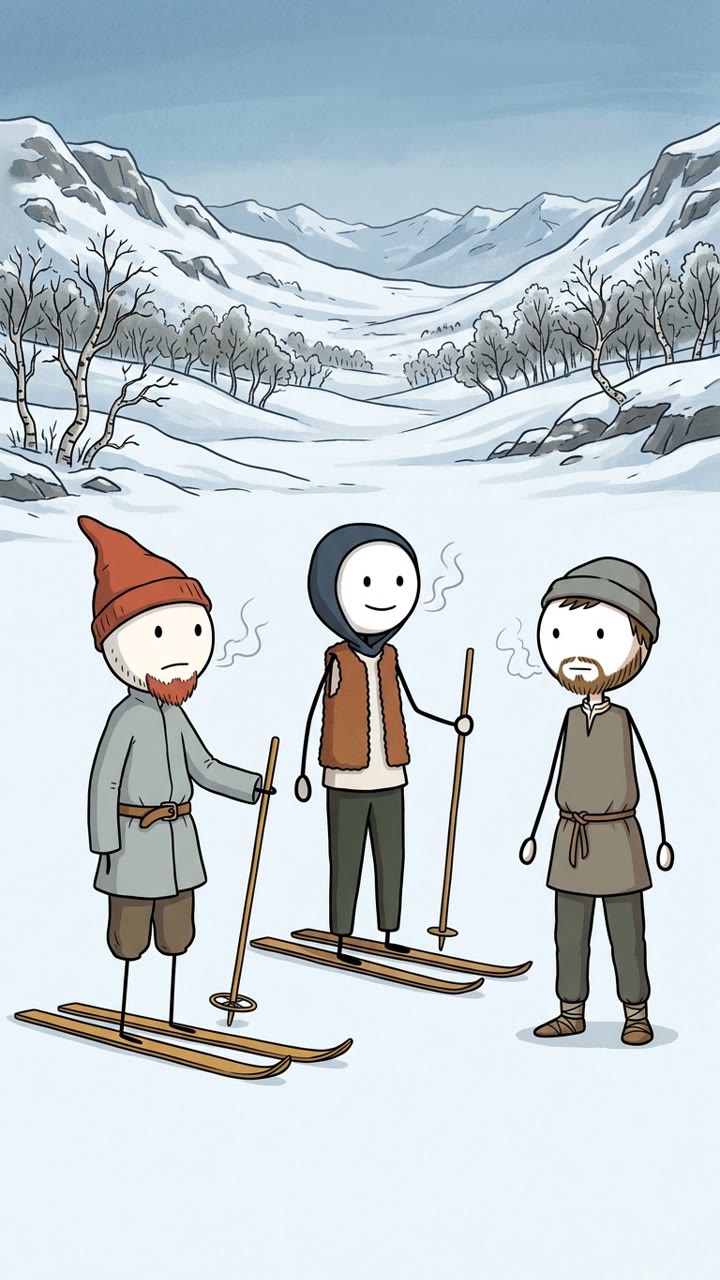
- The skiers: Engelbrekt from Morkarlby and Lars from Kättilbo, sent by the people of Mora. They caught up with him at Sälen, near the border.
- What came next: he was elected king in Strängnäs on 6 June 1523 and ruled until 1560.
- The race: the first Vasaloppet was skied in 1922, with 119 men starting at Sälen.
What was the Stockholm Bloodbath?
To understand why Gustav was fleeing through the snow, you have to start a few weeks earlier, in Stockholm.
At the time, Sweden, Denmark and Norway shared one king under the Kalmar Union, a union of the three kingdoms. Many Swedes wanted to rule themselves. The king, Christian II, had taken Sweden by war, and in November 1520 he was crowned in Stockholm.
Then he called Sweden's leading men to the castle. The doors were shut behind them. The king accused them of heresy, of being enemies of the Church. The next day they were led out onto Stortorget, the main square, and executed one after another. Perhaps eighty people died, perhaps close to a hundred. It became known as the Stockholm Bloodbath.
Among the dead was Gustav's father, Erik Johansson.
Who was Gustav Eriksson before he became king?
He was only about 24, but he had already been through a lot. He had been held prisoner in Denmark at Kalø Castle. He escaped to Lübeck, the German trading city, and in May 1520 he came home to Sweden, landing near Kalmar.
After the Bloodbath he was a hunted man. He fled north to Dalarna, the mining and farming region in the heart of Sweden.
To stay unrecognised, he dressed as a peasant from Mora. At the farm of Rankhyttan he posed as an ordinary farmhand, but a maid noticed something odd: under his rough jumper she could see a fine shirt. That's no farmhand, she is supposed to have said.
The escape from Ornäs
Gustav moved on to Ornäs, the home of a wealthy man, Arent Persson, and his wife. According to the old chronicle, Gustav was betrayed there, although nobody knows for certain who did it. The lady of the house, Barbro Stigsdotter, warned him. She helped him out through the privy, the house's outdoor toilet, and gave him a horse, a sleigh and a servant to drive it. They crossed the ice of Lake Runn towards Svärdsjö.
More narrow escapes followed, including one at a hunter's house in Isala where Danish soldiers came searching. The film tells those scenes in full.
Why did Gustav Vasa flee to Norway?
He finally reached Mora at Christmas. As people came to church, Gustav stood outside and spoke. He told them about the Bloodbath and about his father. The farmers listened and believed him, but they didn't dare rise up. Not yet.
Angry and disappointed, Gustav took his snowshoes and set off west towards Norway. It was New Year 1521.
Then new messengers arrived in Mora with more news of how brutal the killings in Stockholm had been, and the mood turned. The film puts it like this: at Christmas the wood had been too wet and the spark died out. Now the wood was dry. Mora sent its two fastest skiers, Engelbrekt and Lars, after him, through forests and over bogs, day and night. At Sälen they caught up with him.
What happened at Sälen, and how the farmers of Dalarna went on to start the war that ended the Kalmar Union, is the turning point of the film, and you can watch the whole story in The Archive app.
Is the Gustav Vasa story true?
Partly. The escape stories were written down much later. The main account comes from Peder Svart, who wrote it on the king's orders around 1560, nearly forty years after the events. Gustav wanted to look brave, and some parts are probably exaggerated.
One of the best-known scenes, soldiers jabbing spears into a load of hay where Gustav was hiding, isn't even in the chronicle. And many people believe Gustav himself skied the Vasaloppet route. In fact, nobody knows how he really travelled.
If you like the way legend and record pull against each other in Dalarna's history, the story of Fet-Mats, the miner found preserved in Falun, is another one.
How did the Vasaloppet start?
The idea came from a man from Mora, Anders Pers. The first Vasaloppet was skied in 1922, and 119 men started at Sälen.
The race is nine Swedish mil, or 90 kilometres, from Sälen to Mora. It goes the opposite way from Gustav's flight: the way home to Mora, the route the two skiers took back.
The date he became king, 6 June, is now Sweden's National Day. A fugitive in the snow became Sweden's king, and two farmers on skis became a tradition. For another winter escape across Nordic snow, read about Jan Baalsrud.
Watch the full film
The full film follows Gustav from the castle doors in Stockholm to the snowfields near Sälen: the disguises, the betrayal at Ornäs, the soldiers at Isala, the speech outside Mora church and the ride back. It also shows what the chronicle leaves out and why. Watch it in The Archive app, and test yourself with the quiz afterwards.