 The Archive
Dyatlov Pass incident: the night nine hikers fled their tent
The Dyatlov Pass incident refers to the mysterious deaths of nine Soviet ski hikers who fled their tent on the slopes of Kholat Syakhl in February 1959. Cutting the canvas open from the inside in thirty-below weather, the experienced team headed into the freezing night without their boots. Decades of wild speculation followed, while modern scientific research points to a slab avalanche as the most plausible natural explanation.
 The ArchiveThe Dyatlov Pass Incident: The Night Nine Hikers Fled Their TentWatch the film in the app
On a freezing night in February 1959, nine university students and graduates sliced open their canvas tent from the inside and fled into the dark in socks, barefoot, or with a single boot. High in the northern Ural Mountains, the temperature sat at roughly minus thirty degrees Celsius. Not a single member of the expedition made it back alive.
Key Facts About the Dyatlov Pass Incident
- Date: Night of 1–2 February 1959
- Location: Kholat Syakhl ("Dead Mountain"), northern Ural Mountains, Soviet Union
- Expedition: Nine ski hikers led by 23-year-old engineering student Igor Dyatlov
- Sole survivor: Yuri Yudin, who turned back early due to severe joint pain
- Official 1959 verdict: Death caused by "a compelling natural force"
- Leading theory: A slab avalanche triggered after cutting the snow shelf
Who Were the Hikers and What Was Their Goal?
In January 1959, ten young hikers gathered in the Soviet city of Sverdlovsk to prepare for a demanding ski trek across the northern Urals. Most were students or recent graduates from the Ural Polytechnic Institute, an engineering college. The leader was 23-year-old Igor Dyatlov, an experienced outdoorsman accompanied by fellow students like 22-year-old Zina Kolmogorova and the group's oldest member, 38-year-old Semyon Zolotaryov.
Their target was Mount Otorten, a route designated with the toughest grade of all. On 27 January, the team set off on skis from Vizhai, the last inhabited village before the wilderness. The next day, 21-year-old Yuri Yudin suffered severe pain in his knees and joints. Unable to continue, Yudin turned back for home. That painful retreat saved his life, leaving nine companions to push on into the frozen mountains alone.
Why Did the Hikers Abandon Their Tent?
By 1 February, the hikers had moved toward a mountain pass. A sudden winter storm blew across the ridge, driving them off course onto the slopes of Kholat Syakhl, a peak known in the local Mansi language as Dead Mountain. The shelter of the pine forest lay about a kilometre and a half down the mountain, but the group chose to make camp high on the exposed slope.
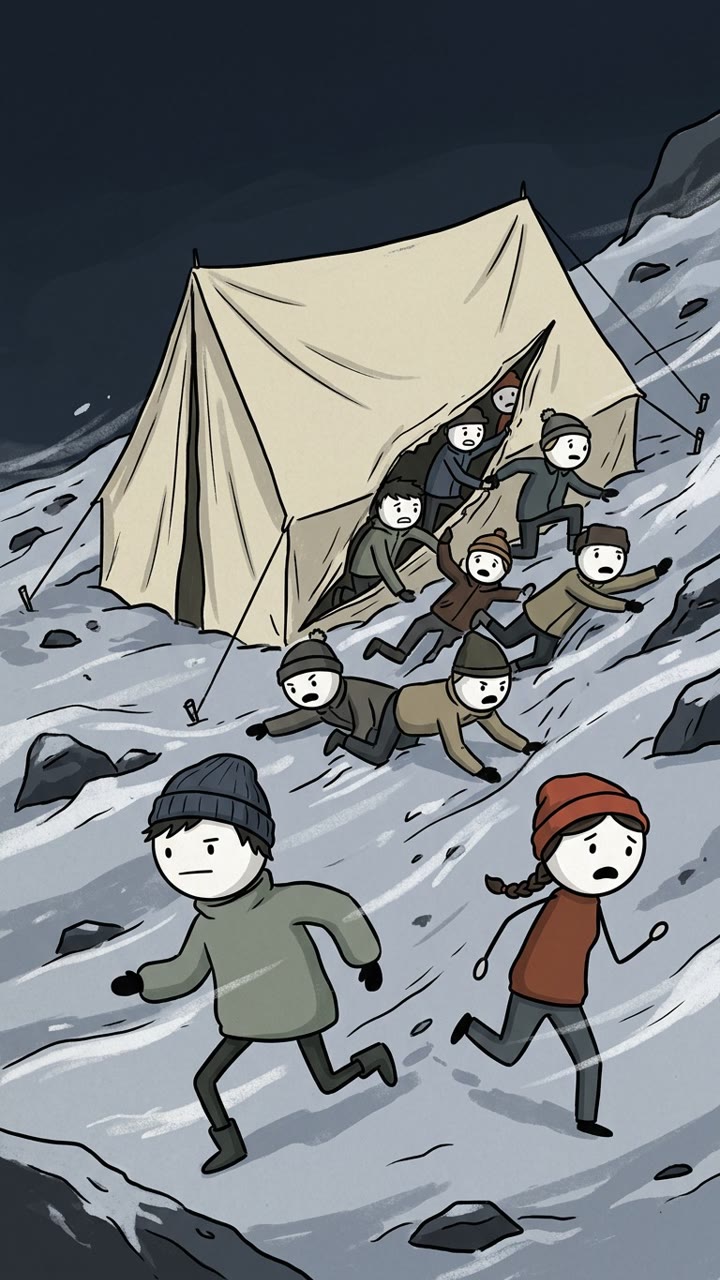
To pitch their tent against the wind, they cut a flat shelf into the snowpack. During the night, something compelled the group to slash the tent wall from the inside. Leaving their boots, clothes, and equipment behind, all nine hikers scrambled downhill through deep snow. Some wore only socks, while others were barefoot or had a single boot.
What Did the Search Teams Find?
Weeks passed without any word from the expedition. On 20 February, anxious relatives demanded a search. Rescuers reached the abandoned campsite on 26 February and found the collapsed tent half buried in snow. Footprints revealed that nine sets of tracks led down the slope toward the forest edge.
Under a massive pine tree, searchers found the first two bodies in their underwear beside the remains of a small fire. Further up the slope, three more hikers, including Igor Dyatlov and Zina Kolmogorova, lay frozen in the snow, facing back toward the tent. All five had died of hypothermia. In May, as the heavy snow began to melt, searchers located the remaining four hikers in a ravine under four metres of snow. Three of them had suffered terrible physical injuries, including broken ribs and a cracked skull.
What Really Happened on Dead Mountain?
Soviet investigators closed the inquiry in May 1959, citing a compelling natural force. For six decades, theories ran wild, blaming secret weapons testing, a yeti, spies, or aliens. In 2021, Swiss scientists Johan Gaume and Alexander Puzrin demonstrated that the shelf the hikers dug into the snow destabilised the slope above. Driven by cold winds, snow accumulated until a slab broke loose hours later, crashing into the tent. Slicing their way out, the hikers fled toward the trees for shelter and fire, but could not relocate the tent in the dark.
Watch the Full Film on The Archive
The Dyatlov Pass expedition remains one of history's most gripping wilderness mysteries. The full documentary examines the archival photographs, original case files, and scientific breakthroughs that reconstruct the group's final hours on Dead Mountain. Watch the complete film today in The Archive app.
