 The Archive
Milorg: The Secret Army That Waited
Milorg was the Norwegian resistance's secret army during the Second World War. It started with a few officers in 1941, was approved by the government in exile in London on 20 November 1941, and was led from January 1943 by a young lawyer, Jens Christian Hauge. By May 1945 it could put almost 40,000 people into the field, and for most of the war its job was to wait.
 The ArchiveMilorg: The Secret Army That WaitedWatch the film in the app
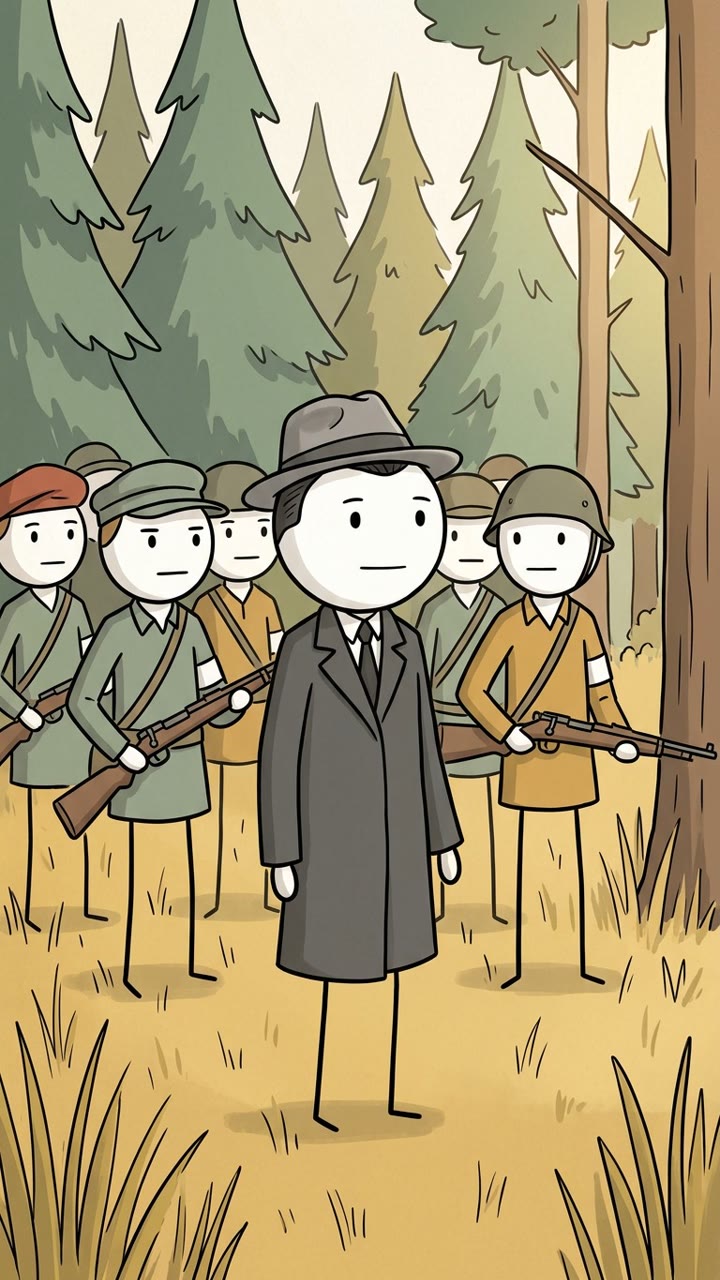
It is May 1945. Germany has lost the war, but a large German army is still standing in Norway. Then young men start coming out of cabins and camps in the forests around the towns. They carry weapons that were dropped from aircraft, and each wears a plain band around his arm.
Within a few days almost 40,000 of them are guarding harbours, bridges and factories, and there hasn't been a single major battle. This was Milorg, Norway's hidden army. So how do you hide an army for four years?
Milorg: key facts
- Name: Milorg is short for militær organisasjon, Norwegian for "military organisation".
- Beginnings: officers began meeting in secret in autumn 1940. In spring 1941 they formed a small leadership called the Council (Rådet).
- Official status: on 20 November 1941 a telegram arrived. The Norwegian government in London had approved Milorg as part of Norway's armed forces.
- Leader: Jens Christian Hauge, a lawyer, led Milorg from January 1943.
- Weapons: more than 700 air drops from Britain got through.
- Strength in May 1945: almost 40,000 members, about 5,000 of them women.
What was Milorg, and how did it begin?
Germany invaded Norway on 9 April 1940. After two months of fighting the Norwegian army gave up, and King Haakon and the government left for London.
That autumn a handful of officers began meeting in secret. By spring 1941 they had a small leadership, the Council, and Milorg had begun. It was a secret army with no uniforms and no barracks.
A secret army still needs someone in charge. The answer came on 20 November 1941, when the government approved Milorg as part of Norway's defence. From then on Milorg answered to the Norwegian High Command in London (Forsvarets overkommando), the country's military leaders in exile.
How was Milorg organised?
Norway was split into numbered districts. Each district was split into areas, then groups, then small teams.
Picture a tree. The trunk is the leadership in Oslo, the branches are the districts, and the twigs are the small teams in every village. If the Germans cut off one branch, the rest of the tree stays standing.
That mattered, because the Germans never stopped looking. In summer 1942 the Gestapo, the German secret police, broke up Milorg in Drammen. The leader, Knut Møyen, had to flee to Sweden, and his deputy took over. He was Jens Christian Hauge, a 27-year-old lawyer, and from January 1943 he was Milorg's top leader.
Why did Milorg wait instead of fighting?
A lot of people picture the Norwegian home front as mostly sabotage and gunfights. In fact most of the work was waiting, training and hiding weapons. Milorg was meant to be ready for the day the Allies (Britain, the United States and their partners) landed in Norway, and then to help them from behind German lines.
Milorg held back on purpose. After Telavåg in 1942, everyone knew what the Germans were capable of. So Milorg waited, month after month and year after year.
Weapons from the sky
Most of the weapons came from the air. British planes flew in over Norway at night. In a forest clearing a small group waited in the dark and signalled to the aircraft from the ground. Then containers came down on parachutes. Each was a long metal cylinder packed with weapons and equipment. The men carried them off and hid them before it got light. More than 700 drops succeeded.
"Gutta på skauen": the boys in the woods
In 1944 the NS, Vidkun Quisling's party, which governed with German backing, tried to register young men for labour service. The home front feared they would end up fighting for Germany, so the word went out: don't turn up. Almost 5,000 young men hid in the forests and mountains. People called them gutta på skauen, "the boys in the woods". From autumn 1944 Milorg built forest camps where they learned to use the dropped weapons.
What were Kretsen, Sivorg and the Home Front leadership?
The home front had a civilian side too, without rifles. In summer 1941 a group of men met at a house in Oslo. It looked like an ordinary dinner party. Their leader was Paal Berg, head of Norway's Supreme Court. The group was known as Kretsen ("the Circle"), and it stayed in contact with the government in London.
Together with other groups this became the civilian resistance, Sivorg (civil organisation). They got hold of false passports, helped people escape to Sweden and supported the illegal underground newspapers. Once the Germans took people's radios in summer 1941, those papers mattered even more. Over 300 of them were published. Between 3,000 and 4,000 people were arrested over them, and 62 were executed.
In the end the home front needed one joint command: the Home Front leadership, Hjemmefrontens ledelse (HL). It made its first public announcement in spring 1944 and linked Milorg with the civilian resistance. HL issued paroles, instructions on how everyone should behave, spread through the underground press and London radio. In spring 1945, for example, it told teachers not to grade exams.
Other parts of the armed resistance had their own stories, such as the saboteurs of the Oslo Gang.
What happened to Milorg when the war ended?
In May 1945 the waiting finally ended, and the hidden army stepped into the open. What Milorg did in those weeks, who took power and how its idea survived into peacetime is what the second half of the film covers. You can watch the whole story in the film in the app.
Watch the full film
The full film follows Milorg from a few officers in 1941 to the day the secret army came out of the woods. It shows how Hauge, Kretsen and HL held the home front together, and what happened to it all after the liberation. Watch the rest in The Archive app on iPhone.
