 The Archive
Mary Celeste: the ship found sailing with no one aboard
The Mary Celeste was a brigantine found drifting on the Atlantic on 4 December 1872, between the Azores and Portugal, with no one aboard. Her cargo was untouched and she had food and water for six months, but her only lifeboat was gone. The ten people who sailed on her from New York were never seen again.
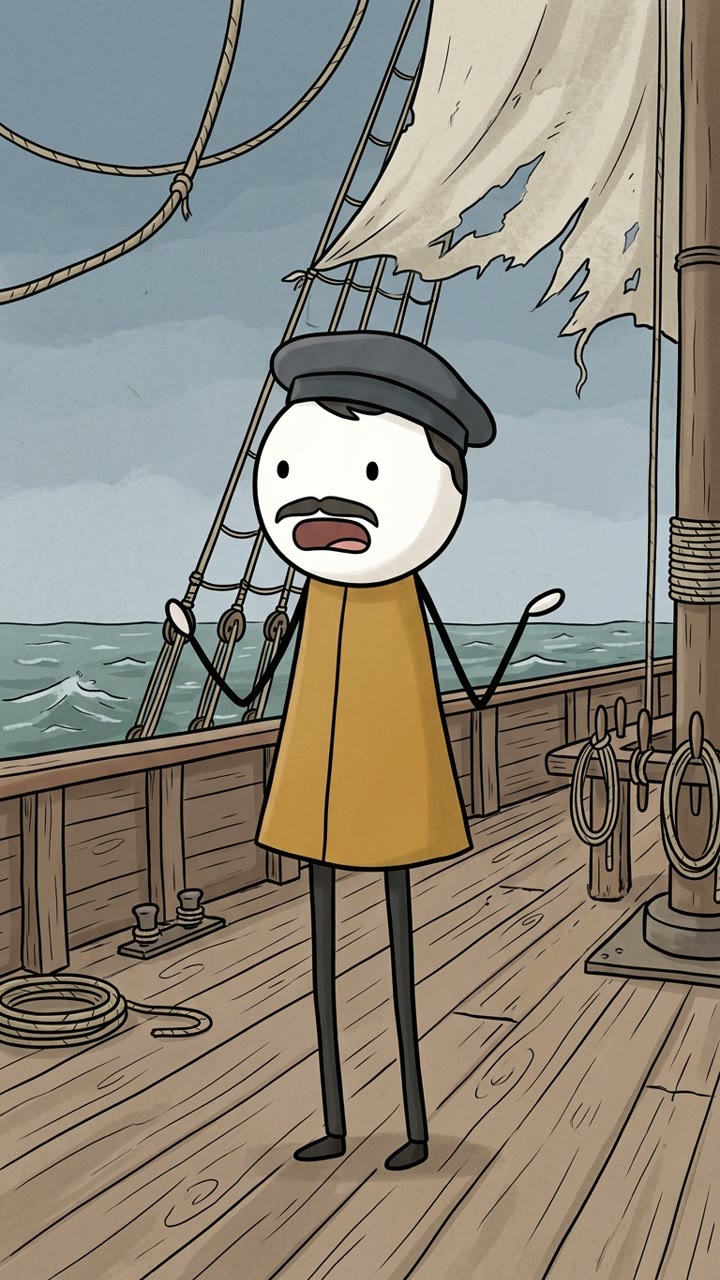
 The ArchiveThe Mary Celeste: The Ship Found Sailing With No One AboardWatch the film in the app
A ship is sailing by herself. Nobody is at the wheel. Two men row over from another ship, climb aboard and call out, and no one answers.
That is how the story of the Mary Celeste begins, and more than 150 years later it is still one of the best-known mysteries of the sea.
Mary Celeste: key facts
- Found: 4 December 1872, adrift between the Azores and Portugal
- Found by: the Dei Gratia, under Captain David Morehouse
- Aboard when she left New York: ten people, Captain Benjamin Briggs, his wife Sarah, their two-year-old daughter Sophia and seven crew
- Cargo: about 1,700 barrels of alcohol, made unfit to drink, bound for Genoa in Italy
- Missing: the ship's only lifeboat, the captain's instruments and most of the ship's papers
- Last log entry: the morning of 25 November 1872, near Santa Maria in the Azores
Who was on board the Mary Celeste?
The Mary Celeste was a brigantine, a two-masted sailing ship about a hundred feet long. She was built in Nova Scotia, Canada, in 1861 and launched under the name Amazon. She was renamed in 1868.
Her captain was Benjamin Briggs, 37, an experienced seaman from Massachusetts. His wife Sarah and their daughter Sophia sailed with him. Their seven-year-old son stayed at home.
The crew were seven men: the first mate, Albert Richardson, a second mate, a steward who also cooked, and four sailors.
When did the Mary Celeste sail, and where did she go?
She left New York on 7 November 1872, carrying her alcohol for Genoa. For two weeks the voyage went well. Each day the ship's position was written on a slate, a small board for notes that were later copied into the logbook.
The last note was written on the morning of 25 November, near the island of Santa Maria in the Azores. After that, nothing. Not one more word.
Nine days later, on 4 December, the crew of the Dei Gratia (the name is Latin for "by the grace of God") saw her on the horizon, drifting and turning with no one steering.
What did they find on the Mary Celeste?
Captain Morehouse sent his mate, Oliver Deveau, across. The deck was empty. Some sails and ropes were damaged and two hatches stood open.
Below deck there was about three and a half feet of water. That is a lot, but not enough to sink her. One of the two pumps lay in pieces, and nearby lay a sounding rod, used to measure how much water is inside a ship.
The captain's instruments were gone, and so were most of the papers. A sword lay under the captain's bed, but there was no sign of a fight. And the lifeboat was missing.
Deveau and two sailors brought the ship to Gibraltar, arriving on 13 December. When the Dei Gratia's men claimed salvage, the court's top lawyer, Frederick Solly-Flood, suspected a crime. No proof of any crime was ever found. If you like unsolved cases built on a few strange clues, you may also want to read about the Dyatlov Pass incident.
Mary Celeste or Marie Celeste?
Many people know the ship as the Marie Celeste, with her lifeboat still aboard and everything in near-perfect order. That version comes from a short story published without the author's name in 1884. The writer was Arthur Conan Doyle, who later created Sherlock Holmes. He changed the name and many of the details, and plenty of readers took it for fact.
So what happened to the crew?
Over the years people blamed pirates, sea monsters and even ghosts. Many historians look instead at the clues found on board: the cargo, the water below deck and the broken pump. The film goes through what those clues suggest, and why nobody can say for certain. The full story is in the film in the app.
Watch the full film
The film follows the Mary Celeste from the pier in New York to the empty deck Oliver Deveau found, and then through the court case in Gibraltar and the theories that came after. It also shows what became of the ship herself. The whole film is in The Archive app for iPhone.