 The Archive
The Invasion of Kristiansand: The Flag That Silenced the Guns
The invasion of Kristiansand in 1940 took place on 9 April, when a German force led by the cruiser Karlsruhe attacked Norway's largest southern city. The old guns of Odderøya Fort drove the ships back twice. Then, at about ten in the morning, the fort stopped firing, because the ships were thought to be flying the French flag.
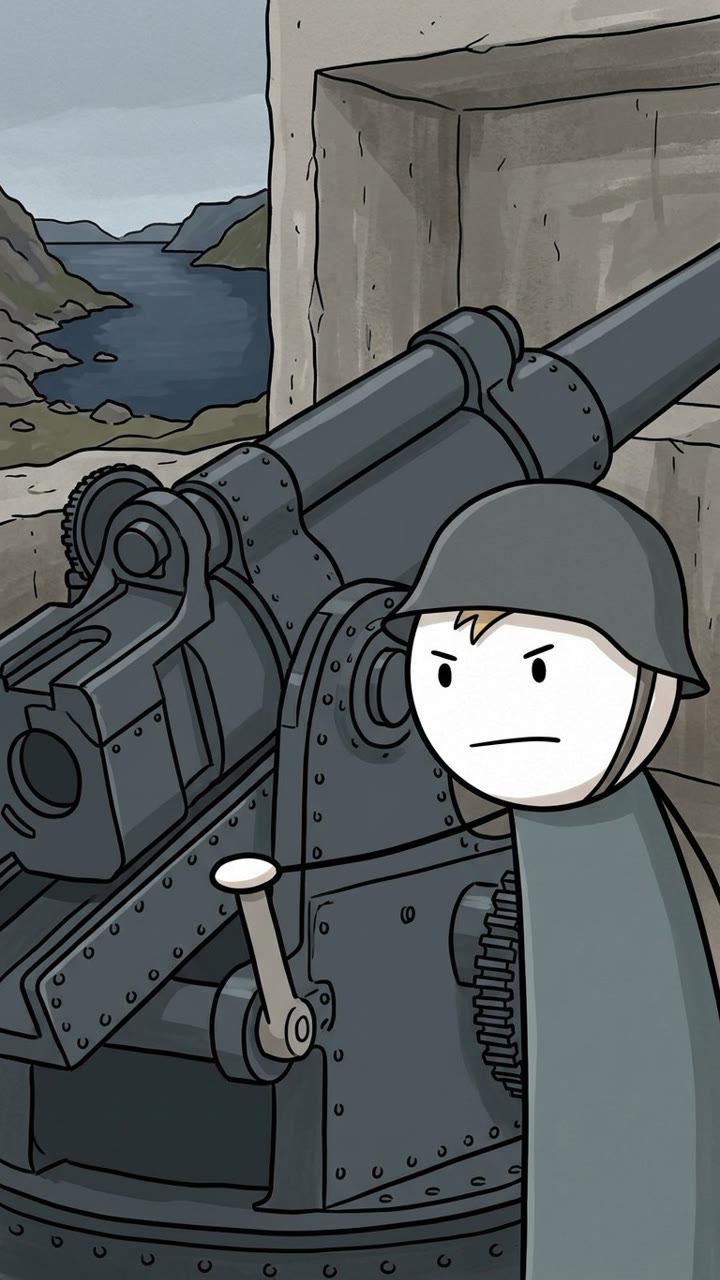
 The ArchiveThe Invasion of Kristiansand: The Flag That Silenced the GunsWatch the film in the app
A flag got the fortress at Kristiansand to stop shooting. It was the morning of 9 April 1940. Twelve German ships lay off the city with around a thousand soldiers on board. On Odderøya, the island at the harbor entrance, the guns were ready.
The fort had already turned the Germans back twice. When the ships came in again around ten o'clock, word reached the gunners that they were flying the French flag. France was Norway's friend. Nobody fired. They were the same German ships as before, and by the end of the day Kristiansand was in German hands.
Key facts: the invasion of Kristiansand
- Date: 9 April 1940, part of Germany's Operation Weserübung against Norway.
- Attacking force: twelve German ships and around 1,000 soldiers, led by the cruiser Karlsruhe under Captain Friedrich Rieve.
- Defense: Odderøya Fort at the entrance to Kristiansand. It was not fully manned, and many of its guns dated from before the First World War.
- Fighting: the fort drove the Germans back twice and fired around a hundred shells that morning.
- Turning point: around 10 a.m. the ships were taken for French, and the guns fell silent.
- Losses: eight Norwegian soldiers were killed on Odderøya. Civilians also died in the city.
Why did Germany attack Kristiansand?
In the spring of 1940 Norway was neutral. It was not part of the war. But Hitler wanted Norwegian ports. In the night before 9 April, Germany attacked many Norwegian cities at once. The Germans called it Operation Weserübung.
Kristiansand was one of the targets. It was the largest city in Sørlandet, the south coast, and a military center for the whole of southern Norway.
The attack was led by the Karlsruhe, a cruiser: a fast, medium-sized warship. The plan was to be inside the city early in the morning. Then the fog came in. It was so thick the ships didn't dare enter the fjord, and the attack was delayed.
How did Odderøya Fort defend the city?
During the night the fort had received warnings that German warships were heading for Norway's biggest cities. That gave the soldiers time to get the guns ready. Still, the fort was far from fully manned, and its guns were old.
Odderøya's job was to close the only way into the city by sea. Think of it as a doorman at the only door.
Later in the morning the fog lifted and the ships came. All the batteries (groups of guns firing together) opened fire on the Karlsruhe. The cruiser fired back with everything it had, then turned away behind a screen of smoke.
German planes then bombed the fort, and an ammunition store was hit and blew up. The ships tried again, and again the two sides traded fire. Some shells landed in the city itself. One took the top off the tower of Kristiansand Cathedral. A German cargo ship, the Seattle, was caught in the crossfire and sank. Once more the Germans pulled back.
Kristiansand had held. For now.
Did Kristiansand fall without a fight?
Many people believe Kristiansand fell without a shot being fired. It didn't. The fort fired around a hundred shells that morning, and eight Norwegian soldiers gave their lives on Odderøya.
But the Germans did not give up. The fog settled again, and German planes kept bombing. The fort also had an order that made everything harder: it was not to fire on British or French warships. Norway was hoping those countries would come to help.
Why did the fort stop firing at ten o'clock?
Around ten, the Germans tried a new plan: break through, with the Karlsruhe behind. That's when the report about the French flag came. A flag on the ships was taken to be French. In smoke and haze, colors are hard to make out at a distance. Nobody knows for certain how it happened. But the guns went quiet, the Germans landed without resistance, and the fort's commander gave up.
What happened next decided far more than the fort. The army in the city, under Major General Einar Liljedahl, left Kristiansand without a real fight, a choice that followed him for the rest of his life. And the Karlsruhe never made it home. Both stories, and the eighty-year mystery of where the cruiser ended up, are told in full in the film.
What is Odderøya like today?
Odderøya was closed to the public from 9 April 1940 and did not open again until 1992. Today people walk among the old gun positions where the fighting took place. Kristiansand then faced five years of German occupation.
For more stories from occupied Norway, read about Jan Baalsrud's escape or the heavy water sabotage.
Watch the full film
The full film follows the battle from the fog off the coast to the moment the guns went silent, and then on to what came after. It covers General Liljedahl's retreat and his trial after the war, the last voyage of the Karlsruhe and how her wreck was finally found deep in the Skagerrak. Watch the whole story in The Archive app on iPhone.