 The Archive
The Lofoten Raid: The Morning Lofoten Cheered
Operation Claymore was a British commando raid on the Lofoten Islands in German-occupied Norway on 4 March 1941. Around 500 British soldiers and 52 Norwegians landed in four harbours, blew up the fish oil factories that fed Germany's explosives industry, and took Enigma rotors and code keys from a burning German trawler. The local people cheered, and the town paid for that cheering later.
 The ArchiveThe Lofoten Raid: The Morning Lofoten CheeredWatch the film in the app
It started on a dark winter morning in the Vestfjord. A small German trawler fired a few shots at a British destroyer, the destroyer fired back, and the trawler caught fire. Before the British got on board, the captain threw his code machine into the sea. What the boarding party found anyway turned out to matter far more than anything blown up on shore that day.
Operation Claymore: key facts
- Date: 4 March 1941, early morning.
- Place: The Lofoten Islands, northern Norway. Four harbours were hit at the same time: Svolvær, Stamsund, Henningsvær and Brettesnes.
- Force: Seven British warships (five destroyers and two troop ships) carrying around 500 British soldiers and 52 Norwegians in British uniform, among them Captain Martin Linge.
- Damage: Around a dozen fish oil factories destroyed, around 3.5 million litres of oil burned, and 18,000–19,000 tons of shipping sunk, including the modern German factory ship Hamburg.
- Captured: 213 German prisoners and 12 members of Nasjonal Samling (Quisling's party), plus two Enigma rotors and the keys for February from the trawler Krebs.
- Volunteers: 314 people from Lofoten sailed to Britain to join the fight.
Why did Britain raid the Lofoten Islands?
By March 1941 Norway had been occupied for almost a year. Germany ran the country, but in Lofoten life still turned on fish. The factories there made cod liver oil and fish oil, and that oil went south to Germany.
In Germany the oil was turned into glycerine, a thick, clear liquid that is needed to make explosives. Every barrel that left Lofoten helped Hitler's war. The British wanted to shut off the tap at the source.
There was a second reason. Britain stood almost alone against Hitler, and the mood at home was grim. Prime Minister Winston Churchill wanted to hit back with fast raids from the sea, carried out by a new kind of soldier: the commando, trained to strike and vanish again. One of the very first was Major John Durnford-Slater, often described as Britain's first commando of the war. He led 250 of the men who went to Lofoten.
What happened on 4 March 1941?
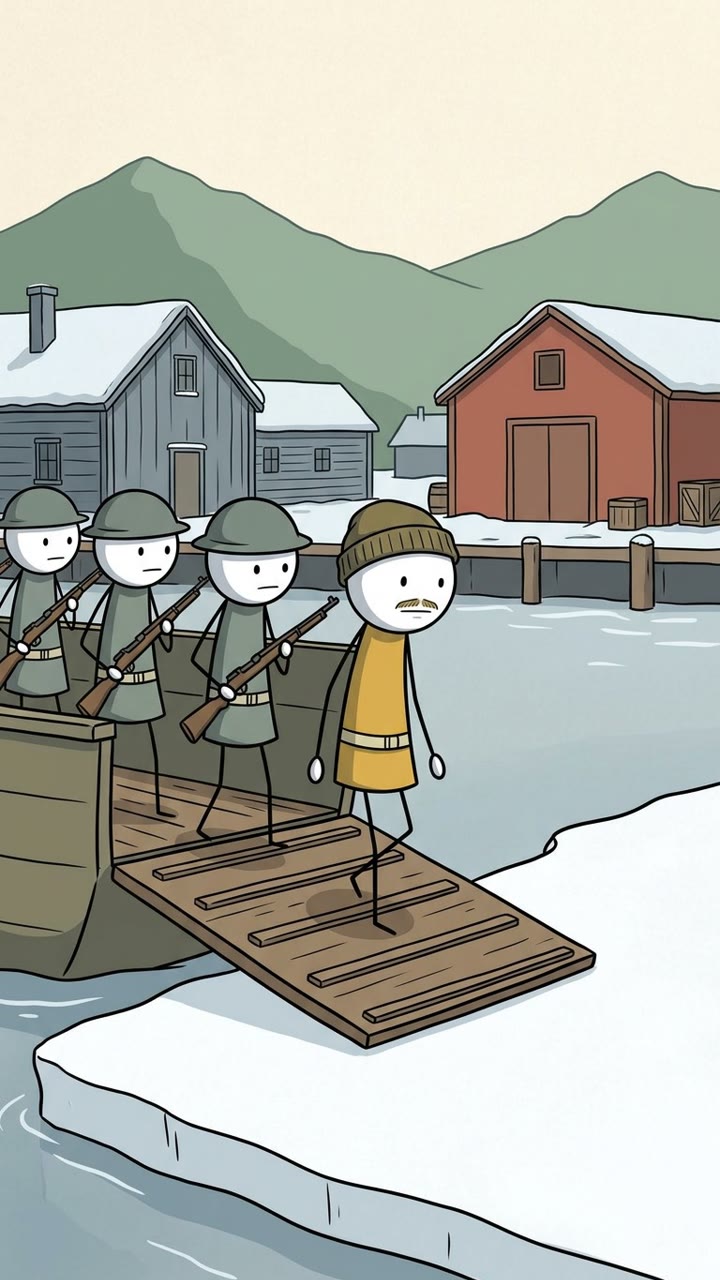
The fleet sailed from Scotland at the end of February. In the early hours of 4 March the landing craft headed for the four harbours, and their ramps came down on ice.
People on their way to work assumed it was a German exercise, until they heard the soldiers speaking English, and some of them Norwegian. The Germans were caught completely off guard. Hardly a shot was fired on land. The only British casualty was an officer who shot himself in the thigh by accident.
Then the demolitions began. Factories went up one after another, oil tanks burned, and ships were sunk in the harbours. In Svolvær people thought the war was over. They poured the soldiers ersatz coffee, made without real coffee beans, and one British officer is said to have sent a sarcastic telegram to Hitler in Berlin.
Not everything went well. At Brettesnes the coastal passenger ship Mira didn't stop in time. A British destroyer thought it was trying to escape and opened fire. Seven civilians died.
The raid at a glance
| Harbour | Role in the raid |
|---|---|
| Svolvær | The main town, where crowds cheered the soldiers |
| Stamsund | One of four simultaneous landings |
| Henningsvær | One of four simultaneous landings |
| Brettesnes | Where the Mira was fired on and sunk |
What did the British find on the trawler Krebs?
The Krebs was the small German trawler that fired on the British destroyer in the Vestfjord. Her commander managed to throw the Enigma machine overboard before British sailors climbed aboard through smoke, flames and papers everywhere.
A lot of people believe the British captured the machine itself. It most likely ended up on the seabed. What they got were two small metal rotor wheels and the keys for all of February. The keys were lists of the machine's daily settings. Without the right settings, Enigma messages are pure noise.
The find went to Bletchley Park, the secret home of Britain's codebreakers, where Alan Turing was among those at work. It helped them read German naval messages, so convoys of merchant ships could be steered away from U-boats. The capture stayed secret for decades.
How many Norwegians went to England after the raid?
Before the fleet left, the people of Lofoten were given an offer: come to Britain and fight. 314 said yes. They left their homes, their boats and their families behind.
The ships also took 213 German prisoners and 12 members of Nasjonal Samling, who were taken against their will. Then the fleet sailed west again.
What happened in Lofoten after the British left?
The cheering had a price. Hitler was furious, and his man in Norway, Reichskommissar Josef Terboven, came to Svolvær himself. How the reprisals played out, how the Lofoten fishermen answered back, and how one morning's raid changed Germany's whole plan for Norway is the second half of the film.
If you're interested in what else happened in occupied Norway, read about Jan Baalsrud or the Oslo Gang.
Watch the full film
The full film follows the raid from the burning trawler to the last ship leaving the Vestfjord, then shows what Lofoten paid for the morning it cheered. It also explains what those two rotor wheels meant for the war at sea, and what is still left to see today. Watch the whole story in The Archive app.