 The Archive
Thamshavn Line sabotage: the little train Hitler needed
The Thamshavn Line sabotage was a series of at least five attacks by Norwegian resistance fighters in 1942–1944 on a small electric railway in Orkdal that carried pyrite to Nazi Germany. The first attack came on 4 May 1942, when Peter Deinboll of the Linge Company blew up the station that powered the trains at Bårdshaug. The saboteurs went after the railway's power and locomotives so that nobody had to drop bombs on the valley.
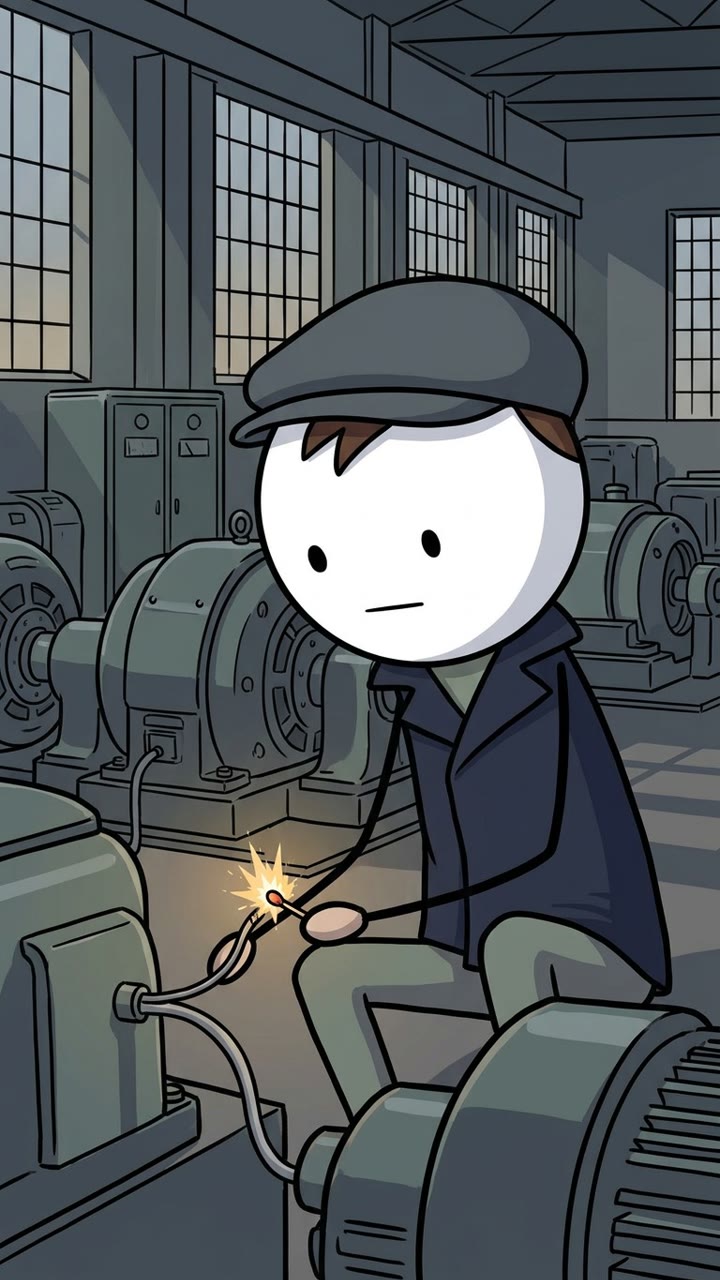
 The ArchiveThe Orkla Sabotage: The Train That Had to Be StoppedWatch the film in the app
It is early morning on 4 May 1942. Three young Norwegians creep through the half-light at Bårdshaug in Orkdal, central Norway. Their target is a building that feeds electricity to a small local railway.
Their leader is Peter Deinboll, a 26-year-old engineer who grew up right down the valley. The guard is overpowered and carried to safety. Deinboll gives the other two a head start, then lights the fuse. At around five o'clock the station blows up.
Why would anyone sabotage a little local train in the middle of a world war? The answer is in the rock it carried.
Key facts about the Thamshavn Line sabotage
- Where: The Thamshavn Line (Thamshavnbanen), a 25 km electric railway from the Løkken mines to the port of Thamshavn in Orkdal, Trøndelag.
- Why: It carried pyrite to the coast, and during the occupation nearly all of it went to Germany.
- First attack: 4 May 1942, Operation Redshank, carried out by Peter Deinboll, Torleif Grong and Per Getz.
- Biggest attack: 3 a.m. on 31 October 1943, with explosions at Thamshavn, Orkanger and Løkken at the same time.
- How many: The Orkla mining operation was attacked at least five times.
- Today: The line runs again as a museum railway, one of the oldest electric railways in the world still in service.
Why did Germany need pyrite from Orkla?
People have mined at Løkken, deep in the Orkdal valley, since the 1600s. The rock there is pyrite, also called iron pyrites: a stone made of iron and sulphur. It shines almost like gold, which is why it got the nickname fool's gold.
The sulphur was what mattered. It was turned into sulphuric acid, a strong acid that factories need, and one of its uses is making explosives.
The mines were run by the company Orkla Grube-Aktiebolag. After Germany occupied Norway on 9 April 1940, nearly all the pyrite went to Germany. By one estimate that was around a quarter of all the pyrite Germany needed.
What was the Thamshavn Line?
The ore had to get from the mountain down to the sea, and the Thamshavn Line did that job. It ran 25 kilometres from Løkken to the harbour at Thamshavn, where the ore was loaded onto ships.
The line opened in 1908, with King Haakon at the opening. It was the first ordinary electric railway in Norway, and that turned out to be its weak spot. The trains ran only on electricity. Cut the power and the ore trains stop.
Why sabotage instead of bombing?
The Norwegian government in exile in London wanted the ore traffic stopped. The first idea was to bomb both Løkken and Thamshavn.
But bombs also hit the houses where people live, so the resistance said no. Sabotage would spare civilian lives. It was a bit like flipping the fuse instead of tearing down the whole house. Many people think of the raid on the heavy water plant at Vemork as Norway's most important act of sabotage (we cover heavy water here), but Orkla has a strong claim of its own.
Who was Peter Deinboll?
Peter Deinboll knew the valley inside out. His father was head of electrical operations at the mines. Peter trained as a chemical engineer and qualified in 1939.
In 1940 he fought the Germans in Nord-Trøndelag. In February 1941 he escaped to Sweden, and from there he travelled almost all the way round the world to reach England. There he joined the Linge Company (Kompani Linge), the Norwegians the British trained for sabotage. Jan Baalsrud was another Linge man, and you can read his story here.
That training is why he was standing at Bårdshaug that May morning in 1942, with Torleif Grong and Per Getz beside him.
What did the first attack achieve?
Two large machines were wrecked and the building was levelled. The Germans hunted Deinboll for seven hours. It took three weeks before the ore trains ran again, and then only with lighter loads. Traffic didn't get back to normal until February 1943.
How many times was the Orkla railway attacked?
At least five times. In late February 1943 Deinboll went after a German ore ship, the Nordfahrt, in Thamshavn harbour, together with Bjørn Pedersen and Olav Sættem. The ship was damaged, though the sources disagree on how badly.
In autumn 1943 seven men parachuted in over Svorkdalskjølen. One of them, Torfinn Bjørnaas, had grown up at Løkken. At 3 a.m. on 31 October 1943 charges went off at Thamshavn, Orkanger and Løkken at once. Four or five locomotives were destroyed, which left the line with just one electric ore locomotive.
More attacks came in spring 1944. In May the last ore locomotive was hit, and in June the last motor car burned. The Germans brought in steam locomotives from Germany and France, put armed guards on the trains, laid a third rail for bigger trains and moved pyrite by lorry. Some ore still got through, and nobody knows for sure how much was stopped.
The British head of sabotage, Colin Gubbins, is said to have thought the Orkla attacks mattered more than Vemork. For more on Norway's wider underground, see our guide to Milorg and the Norwegian resistance.
Victory came at a price for the saboteurs, and for Deinboll's own family. What happened to them during and after the war is the most painful part of this story, and the full account is in the film.
Watch the full film
The film follows the whole campaign, from the first explosion at Bårdshaug to the night three blasts went off at once. It shows the personal cost to Peter Deinboll and his family, and why the story took decades to be put right. You can watch The Orkla Sabotage: The Train That Had to Be Stopped in full in The Archive app.